⚡ Frontend Development in the MCP Era — Faster Slicing, Deeper Understanding
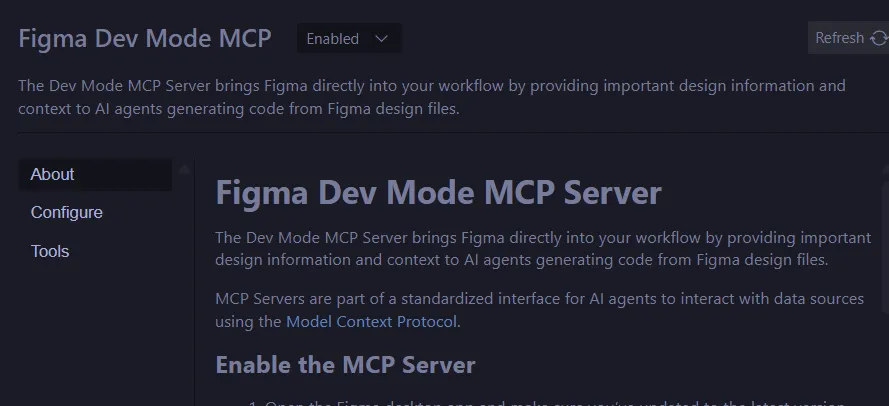
Frontend development has changed — dramatically.
Not because HTML, CSS, or JavaScript disappeared.
But because the way we translate design into code has fundamentally shifted.
This is a reflection on how frontend development evolved before AI, what changed after MCP Figma, and why frontend developers are not being replaced, but redefined.
🕰️ Before MCP & AI (2019–2023): Painful, Manual, but Deep
Between 2019 and 2023, learning frontend development was not friendly.
Design-to-code meant:
-
staring at Figma files,
-
measuring paddings manually,
-
guessing font sizes,
-
fighting inconsistent components,
-
and fixing layout bugs through endless trial and error.
There was no AI to help.
What I had:
-
YouTube tutorials,
-
official documentation,
-
Stack Overflow,
-
and a lot of failed attempts.
It was slow.
It was frustrating.
But it forced me to understand frontend deeply.
I didn’t just learn what works —
I learned why it breaks.
That era trained intuition:
-
how layouts actually behave,
-
why CSS conflicts happen,
-
how responsive design really works,
-
and why clean component structure matters.
Painful? Yes.
Useless? Absolutely not.
That foundation still matters today.
🤖 Enter AI & MCP Figma: Speed Becomes the New Standard
Then AI arrived.
And later — MCP Figma.
Suddenly, the workflow changed.
Now the process looks like this:
-
Connect an MCP client to Figma
-
Prompt an AI agent with intent and constraints
-
Let the agent:
-
read components directly from Figma
-
slice layouts automatically
-
generate structured components
-
respect spacing, typography, and hierarchy
-
-
Review, adjust, integrate
The result?
-
Minimal mismatch
-
Fewer UI bugs
-
Massive speed increase
What used to take days now takes hours.
And this isn’t theory — this is now expected in real work environments.
🧠 Working as a Mentor Changed My Perspective
When I started working as a mentor, one thing became clear very fast:
Speed is no longer optional.
Teams expect you to:
-
adapt quickly,
-
leverage AI intelligently,
-
and still maintain code quality.
Using AI wasn’t discouraged.
It was required.
And interestingly, this habit reshaped my workflow:
-
slicing became faster,
-
integration cleaner,
-
iteration cycles shorter.
MCP Figma didn’t make me lazy.
It made me more effective.
❓ Is Frontend Being Replaced by AI?
Short answer: No.
Long answer:
AI doesn’t understand:
-
company-specific policies,
-
architectural decisions,
-
long-term maintainability,
-
product context,
-
or human trade-offs.
AI can generate code.
But it cannot:
-
decide what should not be generated,
-
enforce team conventions consistently,
-
or protect a codebase from long-term chaos.
Frontend developers are still needed to:
-
design component architecture,
-
write correct prompts,
-
review outputs critically,
-
refactor responsibly,
-
and guard standards.
AI is fast.
Humans are accountable.
And accountability still matters.
🤝 AI Is Not a Threat — It’s a Teammate You Can Push
The biggest mistake developers make today is fear.
Fear of:
-
being replaced,
-
being left behind,
-
becoming “less skilled”.
The truth is simpler:
AI is a multiplier.
If your fundamentals are weak → AI amplifies mistakes.
If your fundamentals are strong → AI amplifies productivity.
That’s it.
Don’t fight AI.
Don’t worship it either.
Use it.
Push it.
Correct it.
Make it work for you.
🧾 Closing Thoughts
Frontend development is no longer just about writing code.
It’s about:
-
judgment,
-
speed,
-
adaptability,
-
and responsibility.
MCP Figma didn’t kill frontend development.
It raised the bar.
And that’s not something to fear —
that’s something to grow into.
If you treat AI as a tool,
and not a replacement for thinking,
you’ll realize:
The future frontend developer isn’t weaker —
they’re sharper, faster, and more intentional.