🔗 Learning Web3 the Hard Way — From Idealism to a Hybrid Architecture That Actually Works
Today wasn’t about chasing buzzwords.
It was about understanding reality.
I didn’t start today with the intention of writing an article.
I simply wanted to learn Web3 and blockchain properly — not from theory, but from building something real.
What I discovered wasn’t just how blockchain works.
I learned where it makes sense, where it doesn’t, and why hybrid systems exist.
This is a reflection of that learning.
🧠 Starting Point: “Let’s Build a Web3 Voting App”
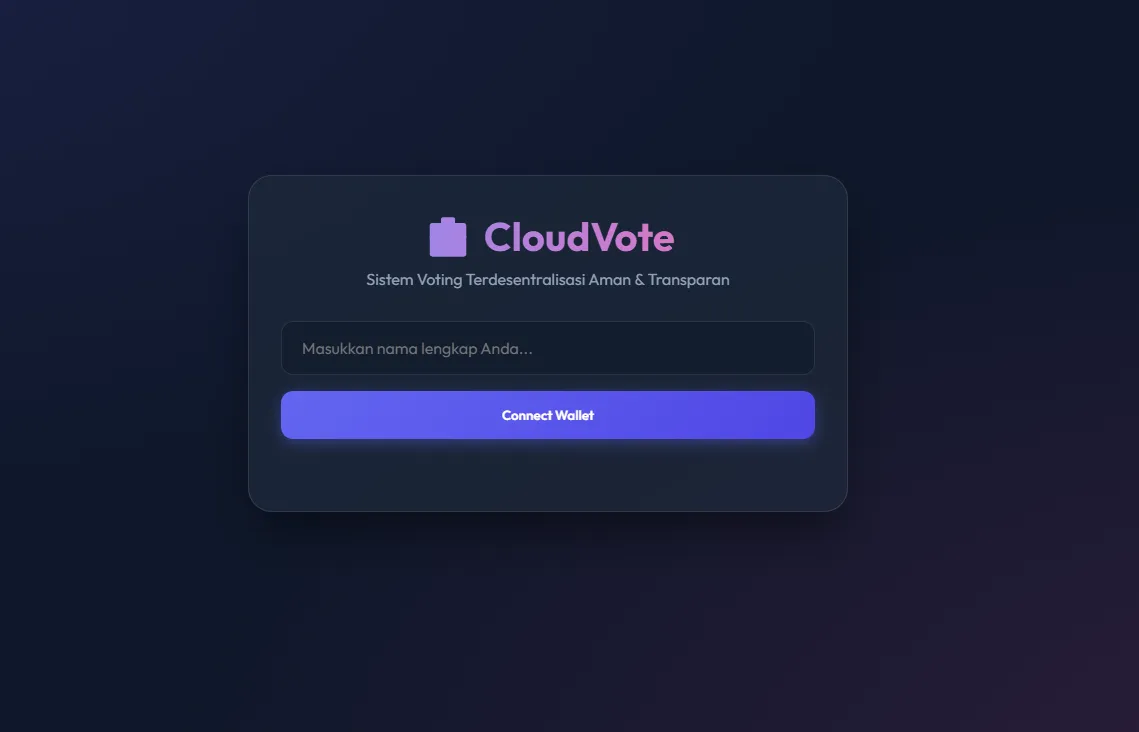
The initial idea was simple:
“What if a voting system (RT / OSIS) used blockchain so it couldn’t be manipulated?”
At first, the answer seemed obvious:
-
smart contract for voting,
-
wallet-based authentication,
-
one address, one vote.
So I built it.
Pure Web3. Pure blockchain. Pure idealism.
Repository:
And technically?
It worked.
🧱 The First Reality Check: Web3 Is Not Free, Just Abstracted
Very quickly, reality showed up.
Even on testnet, I had to understand:
-
RPC providers,
-
private keys,
-
deployer wallets,
-
gas fees,
-
network state resets,
-
ABI mismatches,
-
BigInt serialization issues.
This was not beginner-friendly — and that’s fine.
But a more important question emerged:
“Does every voter realistically need a wallet?”
For developers, yes.
For DAO members, yes.
For crypto-native communities, absolutely.
But for:
-
RT residents,
-
students,
-
non-technical users?
No. And forcing it would be dishonest.
🔥 The Second Reality Check: Web3 UX vs Real-World UX
A pure Web3 approach means:
-
every vote is a transaction,
-
every transaction requires a wallet,
-
every wallet requires setup,
-
every setup introduces friction.
That’s not a technical problem.
That’s a human problem.
At that point, the real learning started.
🔄 Pivot: From “Web3 Everywhere” to “Web3 Where It Matters”
Instead of asking:
“How do I force users into Web3?”
I started asking:
“Where does blockchain actually add value?”
The answer was clear:
-
immutability,
-
auditability,
-
transparency,
-
tamper resistance.
Not authentication. Not UX. Not form input.
That realization led to a redesign.
🧩 The Hybrid Model: Web2 UX, Web3 Trust
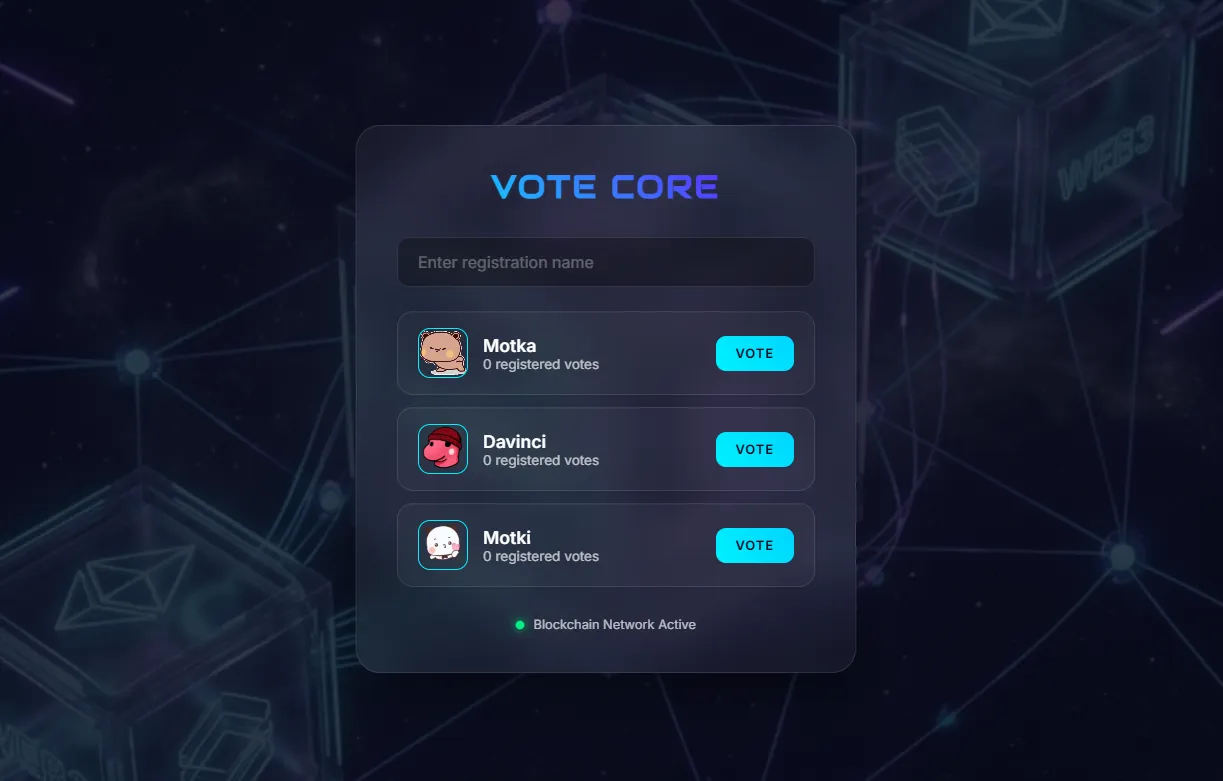
I rebuilt the system using a hybrid architecture.
Repository:
The new model:
User (Normal Web Form)
->
Backend Server (Node.js)
->
Smart Contract (Blockchain)
Key decisions:
-
users do NOT need wallets,
-
users do NOT see MetaMask,
-
users do NOT pay gas,
-
backend signs transactions using an admin wallet,
-
blockchain remains the source of truth.
This is often called:
-
gasless transactions,
-
relayed transactions,
-
hybrid Web2 + Web3.
And yes — this is how many real systems are actually built.
⚖️ Trade-offs (And Why They’re Acceptable)
This approach is not “perfectly decentralized”.
And that’s okay.
What we gain:
-
realistic UX,
-
accessibility,
-
lower cognitive load,
-
practical adoption.
What we accept:
-
a trusted backend,
-
operational responsibility,
-
gas costs paid by the system, not the user.
For a voting system in a non-crypto-native environment,
this trade-off makes sense.
Engineering is not about ideology.
It’s about choosing the right compromise.
💸 A Crucial Lesson: “No Wallet” ≠ “No Cost”
One of the most important things I learned today:
Removing wallets from users does NOT remove gas fees.
It simply moves the responsibility:
-
from users,
-
to the system.
Blockchain computation is never free.
It’s just abstracted differently.
This forces better engineering decisions:
-
rate limiting,
-
quota management,
-
network selection (L2 vs mainnet),
-
cost monitoring.
These are real-world concerns, not tutorial problems.
🧠 What This Taught Me About Web3
Web3 is not:
-
a replacement for Web2,
-
a silver bullet,
-
a UX solution.
Web3 is:
-
a trust layer,
-
an integrity layer,
-
a verification layer.
And like any layer:
It should be used intentionally, not everywhere.
🧭 Final Reflection
Today’s learning wasn’t about writing Solidity.
It wasn’t about Hardhat or ethers.js.
It was about system thinking.
Understanding:
-
where decentralization helps,
-
where it hurts,
-
and how to design systems that humans can actually use.
Pure Web3 taught me the rules.
Hybrid Web2 + Web3 taught me engineering judgment.
And that distinction matters.
🧾 Closing Thoughts
If I summarize today in one sentence:
Web3 is powerful — but only when paired with humility and pragmatism.
I didn’t abandon Web3.
I learned how to use it responsibly.
And that’s a much more valuable lesson than blindly going “fully decentralized”.
This journey is ongoing.
But today, it finally made sense.